
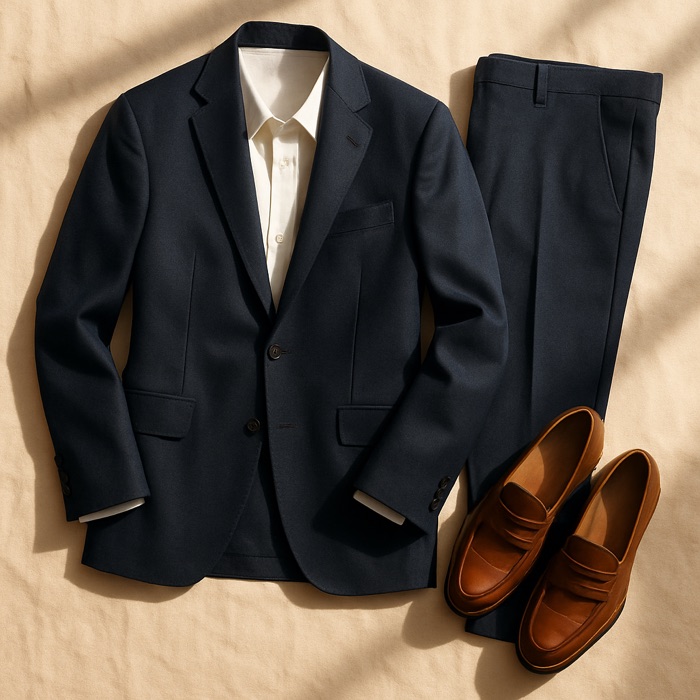
 The safer direction
Classic navy tailoring
AskAna inspiration
Look like the hire.
Interview dressing has one job: remove doubt. The ideal outfit is so right for the room that nobody thinks about it - least of all you, because you need your attention on the conversation, not your hemline.
Start by reading the company's register rather than a generic rule. Law, finance and consulting still reward tailoring in dark neutrals. Tech, design and startups read a full formal suit as a slight misreading of the culture - there, sharp separates or a well-cut dress with a blazer land better. When you genuinely can't tell, dress one notch above what you think employees wear day to day: being slightly overdressed reads as respect, being underdressed reads as a misjudgement.
Fit beats price at every budget. A well-fitted high-street blazer outranks an expensive one that pulls across the shoulders, and interviewers register the difference without being able to name it. Keep colour quiet and let a single detail carry personality - a texture, a considered earring, a good shoe. Then wear the whole outfit for an hour beforehand: sit, cross your legs, reach for a bag. Anything that needs adjusting will need adjusting at the worst moment.
Get two looks for your event
Ana styles one safe and one bolder look for your exact date, weather and budget, with verified shopping links where available. Your first styling is free.
Style me for thisInterviews rarely state a dress code, so you're reading the industry instead. Business formal means a matched suit or a structured dress with a blazer in dark or neutral tones. Business casual - the norm in tech and creative fields - means tailored trousers or a skirt with a knit or blouse, blazer optional. 'Smart casual, we're relaxed here' still means tailored: it's an invitation to skip the suit, not to skip the polish.
Full breakdown: business formal explained
Under 100 local currency
One well-fitting blazer and tailored trousers from the high street, in navy or charcoal. Spend on the tailoring, not the label - and consider a quick alteration, which costs little and shows most.
100 - 200 local currency
A blazer in real wool with a proper shoulder, plus a quality shirt or knit. This is the band where fabric stops looking like fabric and starts looking like tailoring.
200+ local currency
An investment suit or a beautifully cut dress-and-blazer combination you'll wear for years. Buy the alterations too - even at this level, fit is what's actually being noticed.
The safer directionClassic navy tailoring
AskAna inspiration
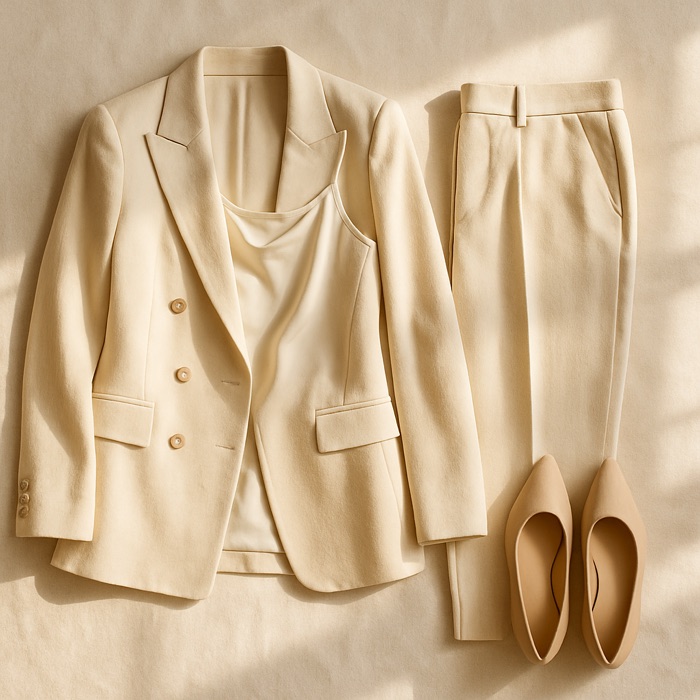 The bolder direction
Soft ivory tailoring
AskAna inspiration
A starting point, not a prescription. Ana creates two looks around your date, weather, budget and taste. Style yours.
It depends entirely on the industry. Law, finance, consulting and traditional corporate roles: yes, or something close. Tech, design, media and startups: a full suit can read as misjudging the culture - sharp separates or a dress with a blazer is stronger. When unsure, dress one notch above the everyday employee standard.
Navy, charcoal, black and refined neutrals do the work quietly. They keep attention on what you're saying. Colour isn't forbidden - one considered piece can be memorable in a good way - but it should be a deliberate choice rather than the loudest thing in the room.
Dress the top half exactly as you would in person, and check it on camera first - fine stripes and busy prints can shimmer badly on video. Solid mid-tones read best. Dress the bottom half properly too: you may need to stand, and it changes how you carry yourself.
Mildly, and it's far less costly than being underdressed. Turning up a notch smarter than the room reads as taking the opportunity seriously. Turning up too casual is the misjudgement that's remembered.
Ready to stop guessing?
Two complete looks, tailored to your style, occasion and budget.
Get two looks for your event